











Octopus Apollo VCT
Accelerating the growth of business-to-business (B2B) technology companies
Open for new investment
Octopus Apollo VCT
Accelerating the growth of business-to-business (B2B) technology companies
Open for new investment
Investing in high-growth potential
B2B technology companies
Octopus Apollo VCT aims to accelerate the growth of small and medium-sized B2B technology companies. It focuses on those developing software or AI solutions that have already taken their product to market and are seeking capital to scale.
As with all VCTs, investments are higher-risk and not suitable for everyone.
*Early bird offer: A 2.5% Early Bird discount on the initial fee is available for the first £20m of applications received or until 17 December, whichever comes first. Clients who have previously invested in any Octopus VCT will also qualify for a 1% loyalty discount. Total discounts cannot exceed the initial charge payable.
20 Years of Apollo VCT
Since launching in 2006, Octopus Apollo VCT has evolved alongside some of the UK’s most innovative businesses and is proud of what it has built over the past two decades. Hear more from Lead Fund Manager Paul Davidson as he shares the latest on Apollo and the current fundraising opportunity.
Risks to bear in mind
Capital at risk
The value of an investment, and income from it, can fall as well as rise. Investors could end up getting back less than they put in.
Tax treatment
Tax treatment depends on individual circumstances and tax rules could change in the future.
Volatility and liquidity
VCT shares could fall or rise in value more than other shares listed on the main market of the London Stock Exchange. They may also be harder to sell.
VCT qualification status
Tax reliefs depend on the VCT maintaining its qualifying status.
Reasons to invest in Octopus Apollo VCT

Annual dividend target
Octopus Apollo VCT targets an annual dividend yield of 5% of the net asset value (NAV) with the potential for special dividends, though these are not guaranteed.

Risk-return profile
A mix of debt and equity investments provides investors with a different risk-return profile to equity alone.

Established and diversified
The portfolio has around 45 UK smaller companies across a wide variety of industries.

Tax reliefs
Income tax relief equal to 20% of the amount invested up to the first £200,000 of investment.
Tax-free capital gains and dividends.
Portfolio companies
Hurree
An AI-powered business intelligence platform that helps organisations bring data from multiple systems into one place and turn it into actionable insights.
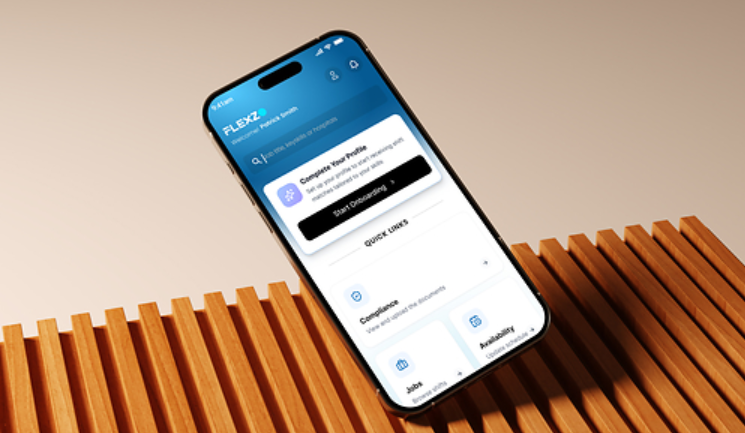
Flexzo
A workforce management platform helping healthcare organisations fill staffing gaps more efficiently.

Gradient Labs
A specialist AI platform helping financial institutions automate customer operations in regulated environments.

Fiscal Technologies
Fiscal Technologies provides AI-powered Procure-to-Pay solutions that protect finance teams from fraud, errors, and duplicate payments.

Sova
Helps companies improve transparency and diversity in their hiring processes.
Octopus Apollo VCT Performance
| 12 months to 31 July 2026 | Annual total return¹ | Annual dividend yield² |
|---|---|---|
| 2022 | 12.2% | 11.2%3 |
| 2023 | 8.2% | 5.0% |
| 2024 | -1.3% | 5.1% |
| 2025 | 5.8% | 5.2% |
| 2026 | 1.8% | 5.2% |
Past performance is not a reliable indicator of future results and may not be repeated. Dividends are not guaranteed.
The performance information above shows the total return of Octopus Apollo VCT for the last five years to 31 July 2026.
¹ The annual total return for Octopus Apollo VCT is calculated as the change in net asset value (NAV), plus any dividends paid during the period, divided by the NAV at the start of the period. Performance shown is net of all ongoing fees and costs.
² The annual dividend yield is calculated by dividing the dividends paid during the period by the NAV at the start of the period.
3 A special dividend of 3.1p was paid in January 2022.
The NAV is the combined value of the assets owned by the VCT after deducting the value of its liabilities (such as debts and financial obligations).
Fund updates
Dividend history
View the dividend history for shareholders in Octopus Apollo VCT.
Shareholder information
See the announcements and reports for shareholders in Octopus Apollo VCT, and find relevant contact information.
Fees and charges
If you are investing in Octopus Apollo VCT through a financial adviser, here are two ways you can facilitate fees. For other options view page 20 of the Apollo VCT brochure.
Through a financial adviser who charges a one-off fee
You can ask for the one-off fee for the investment advice to be paid on your behalf through the VCT.
Through a financial adviser who charges ongoing fees
Where an investor receives ongoing advice, you can choose to pay your financial adviser a smaller initial fee and ongoing fees for as long as you hold the investment. Both of these fees can be paid on your behalf through the VCT.
Fees and charges
When investing through a financial adviser, clients have two ways to facilitate fees. For other options view page 20 of the Apollo VCT brochure.
If you charge a one-off fee
The one off-fee for the investment advice can be paid on your client’s behalf through the VCT.
If you charge ongoing fees
Where your client receives ongoing advice, they can choose to pay you a smaller initial fee and ongoing fees for as long as they hold the investment. Both of these fees can be paid on the investor’s behalf through the VCT.
| Advised (initial only) | Advised (initial and ongoing) | ||
|---|---|---|---|
| Upfront charges | Initial fee (to Octopus) | 3% | 3% |
| Adviser charges | Up to 4.5% | Up to 2.5% | |
| Ongoing annual charges | Annual management charge (to Octopus) | 2% | 2% |
| Adviser charges¹ | – | Up to 0.5% | |
| Performance fees | Performance fee ² | 20% | 20% |
(1) Ongoing adviser charges or commission are paid for a maximum of nine years after the investment date. If your client chooses to pay less than the maximum amount shown in the table, Octopus Apollo VCT will use the money left over to buy more VCT shares for them. Similarly, if you’re an execution only intermediary and do not take any upfront commission, this amount will
instead be used to buy additional VCT shares for your client.
(2) Octopus may charge a 20% performance fee. In order to be eligible to do so the NAV plus cumulative dividends at the year end (31 January) must exceed the previous highest NAV plus cumulative dividends (net of performance fee already taken). In this case Octopus will charge a 20% performance fee on the excess. For full details on the performance fee and other fees please see
the prospectus and KID. The minimum investment is £5,000.
How to invest:
Minimum investment is £5,000.
Clients can choose to invest via bank transfer, cheque or banker’s draft.
Clients can only claim tax relief on VCT investments of up to £200,000 in any single tax year.
We will allot clients’ VCT shares at the next available allotment date.

How to invest:
Minimum investment is £5,000.
You can choose to invest via bank transfer, cheque or banker’s draft.
You can only claim tax relief on VCT investments of up to £200,000 in any single tax year.
We will allot your VCT shares at the next available allotment date.
Looking for the right VCT for your client?
Every client’s circumstances are different – from risk appetite and income needs to sector preferences.
That’s why we offer a range of VCTs, each with its own investment approach and characteristics.
Use our VCT Navigator to quickly identify the VCT best suited to your client’s needs.

Contact our team
If you have a question about Octopus Apollo VCT or an application,
call us on 0800 316 2295.
If you have a question about an existing VCT, please visit our FAQ page.
We’re here to support you
If you’ve got a question about any of our products or services, please get in touch.
If you have a question about an existing VCT, please visit our FAQ page.
Please read: We do not offer investment or tax advice, and we always recommend investors talk to a financial adviser before making investment decisions. This advertisement is not a prospectus. Investors should only subscribe for shares on the basis of information contained in the prospectus, supplementary prospectus, (if published as part of this offer), Alternative Investment Fund Managers Directive (AIFMD) supplement and the Key Information Documents (KID), which are available in the document section of this page.
Related VCT resources

Venture Capital Trusts Explained
Learn how VCTs function, the types of early-stage companies they invest in, and the tax benefits and risks involved.

How to claim VCT tax relief
Learn how to claim up to 20% income tax relief on Venture Capital Trust (VCT) investments and enhance your understanding to support your clients’ investment decisions.

VCT FAQs
Our easy-to-read guide answers common questions about Venture Capital Trusts (VCTs), designed to help you understand VCTs better and assist your clients with confidence.
Octopus Apollo VCT FAQs
What tax reliefs are available in Octopus Apollo VCTs?

Investors in Apollo VCT may benefit from three main tax advantages:
- Income tax relief: Up to 20% on new share subscriptions, up to a maximum of £200,000 per individual, per tax year, provided shares are held for at least five years.
- Tax-free dividends: Dividends paid by Apollo VCT are free from income tax.
- Capital gains tax exemption: No capital gains tax is payable on profits when disposing of VCT shares.
Advisers should make clear that tax treatment depends on the client’s circumstances and that reliefs may change in the future.
Can Apollo VCT shares be sold at any time?
Apollo VCT shares are listed on the London Stock Exchange, but the secondary market for VCTs is very limited. Octopus typically operates a share buyback facility at a discount to net asset value (usually around 5%), but this is not guaranteed. If shares are sold within five years of purchase, any upfront income tax relief claimed will normally have to be repaid to HMRC.
What resources does Octopus provide to help advisers present Apollo VCT to clients?
Octopus provides advisers with a suite of support materials, including the prospectus, Key Information Documents, and client-friendly guides. Regular reporting is available through annual and interim reports, along with portfolio updates. Advisers also have access to dedicated business development managers, CPD-accredited training, and an adviser support desk to help with suitability discussions and client reviews.
What are the minimum and maximum subscription levels for Apollo VCT?
The minimum subscription is currently £5,000, though advisers should confirm the latest figure in the current prospectus. There is no formal maximum subscription, but only the first £200,000 per individual, per tax year qualifies for VCT income tax relief. Subscriptions above that threshold would not attract upfront tax relief, though clients could still benefit from tax-free dividends.