









The Octopus Inheritance Tax Service is changing.
An important change is being made to the structure of Fern Trading Limited (Fern), the portfolio company Octopus Inheritance Tax Service (OITS) and OITSPlus investors hold shares in.
Alongside this, there will be some changes to how OITS will operate going forward. This page explains what’s changing and what it means for you.
 Last updated: 16 October 2026
The Octopus Inheritance Tax Service is changing.
Important changes are being made to Fern Trading Limited (Fern), the portfolio company that investors in OITS and OITSPlus hold shares in, alongside changes to how the Service will operate going forward.
This page explains the proposed changes and what this means for investors.
Last updated: 16 October 2026
Fern Trading Limited
To remind you, Fern is the portfolio company OITS investors hold shares in. Fern owns and operates a diversified group of trading businesses across renewable energy, real estate and fibre infrastructure. The investment is designed to qualify for Business Relief, subject to the relevant conditions being met, while targeting a steady, modest level of return, and access to your investment.
Nearly all of Fern’s more established businesses generate a profit, while others require investment to support their development and long-term value. Fern is overseen by its Board, which has a majority of directors independent of Octopus. Its share price is determined through an established valuation process, with external valuation input and review where appropriate.
How your investment works now
As a reminder, when you invested in OITS, your money was used to buy shares in a company called Fern. Fern owns a range of UK businesses, in areas including renewable energy and property, and is designed to help reduce the inheritance tax your family pays when you die, as long as you’ve held your investment for at least two years and you still hold it when you die. While the board of Fern is majority independent from Octopus, we manage Fern on a day-to-day basis.
We recognise recent performance has been disappointing. Fern’s biggest challenge has been its retail fibre businesses, which have built broadband networks serving hundreds of thousands of homes across the UK. Developing this infrastructure has required significant investment, and customer growth has been slower than anticipated. Many of the businesses operating in this part of the fibre sector, not just ours, have faced real challenges in recent years.
Together with Fern’s board, we have been pursuing ways to improve performance. We’ve materially strengthened the management teams and recently entered talks with another fibre broadband company. Whilst those talks did not reach the conclusion we originally anticipated for various reasons, we believe there is strong merit in continuing to pursue opportunities to improve the outcomes for Fern’s fibre businesses.
Because the outcome of the potential deal could have had a significant impact on the value of Fern’s shares, we temporarily paused new investment and withdrawals. This was important as it prevented anyone buying or selling Fern shares at a price that might not reflect their true value.
We believe there is a better way to manage this part of the portfolio. To support this, there has been some important structural changes to Fern.
What’s changing with Fern?
Fern is being split into two share classes
Fern will create two separate share classes; Fern A and Fern B. Existing clients will receive shares in both classes.
Fern A will reopen for trading
Fern A will represent the more established portion of the existing Fern portfolio and, with a plan to return to weekly trading, will continue to target steady, moderate levels of return over the long term.
Fern B will be managed for the longer term
Fern B contains Fern Fibre Trading Limited (FFTL). It will be closed to new investment and managed with the aim of maximising long-term value, allowing the underlying investments time to mature and realise their potential.
Business Relief qualification
There should be no change to Business Relief qualification for either Fern A or Fern B shares.
Watch our video for an overview of why we’ve made the change, what sits within each share class, and answers to some of the key questions we’ve heard from advisers.
You can also find more detail below or visit our Questions and answers section.
What has changed?
Your investment in Fern has been split into two share classes. There’s nothing you need to do. We’ve done this automatically behind the scenes.
Going forward, you hold two investments: Fern A and Fern B shares.
More detail on how each investment will operate can be found in the Questions and Answers section.
Fern A
Fern A makes up 68% of Fern at the time of the split. It holds the assets and businesses in the renewable energy and property sectors, and a fibre broadband network that serves businesses in London. Octopus has a strong track record operating in these sectors.
Fern B
Fern B holds Fern’s retail fibre business and accounts for the remaining 32%.
What’s inside Fern A shares?
Explore the businesses and assets that make up the wider portfolio.

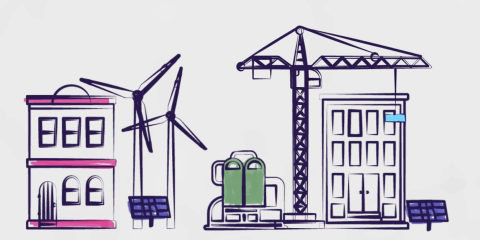
Renewable energy
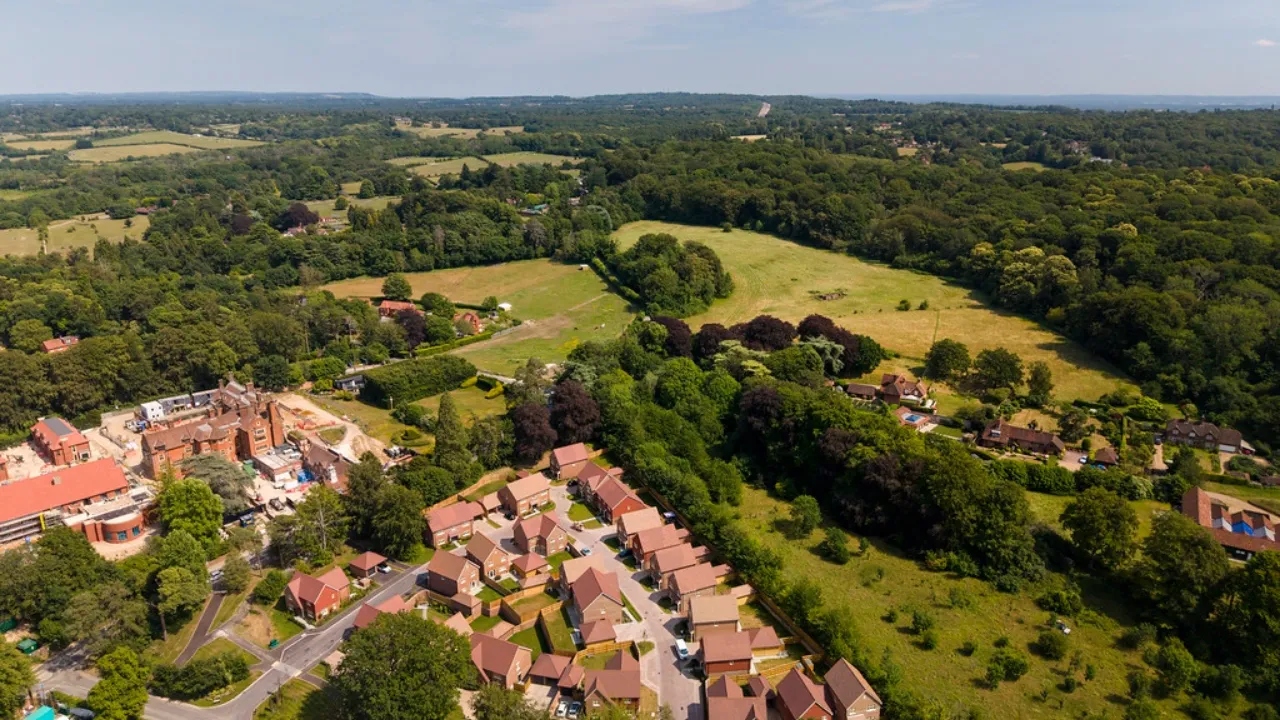
Real estate

Enterprise fibre
What’s inside Fern B shares?
Fern B will be made up of Fern Fibre Trading Limited (FFTL), which operates the Group’s wholesale fibre infrastructure. The business will continue to operate and, where appropriate, pursue opportunities that aim to improve investor outcomes. Fern will continue to focus on maximising the value of the business.

What does this mean for me?
There’s nothing you need to do. Your investment will continue to be managed in line with the aims of OITS including achieving Business Relief qualification.
We know you may have questions, so we’ve included some questions and answers below to explain the changes in more detail. You can also find a summary document outlining the changes here.
We appreciate this is a significant change. However, we believe it’s a necessary step to enable Fern to deliver a better outcome for your investment in the long term. If you’d like to discuss what these changes mean for your individual circumstances, we recommend speaking with your financial adviser if you have one in the first instance.
What do I need to consider for my clients?
We understand this is a significant change, and appreciate you and your clients will have questions. We’ve provided a detailed Q&A below, along with some materials to help you understand the structure, what this means for any ongoing suitability, and how we’ll support you and your clients.
Download our client-friendly guide you can share with your clients.
Questions and answers
Will my investment continue to qualify for Business Relief?

We expect both Fern A and Fern B to continue qualifying for Business Relief, and we do not expect the split to affect existing qualifying periods.
Why are the fibre businesses being separated?
The fibre businesses have different characteristics, funding requirements and timescales to Fern’s more established businesses. Separating them allows us to give the fibre businesses time to focus on realising value over the longer term.
Fern A however will include Vorboss, its Central London business fibre network.
Vorboss serves different customers and operates differently from Fern’s other fibre investments, providing dedicated, high-capacity internet services to businesses, landlords and public sector organisations across London.
Are my fees changing?
We are waiving all historic accrued Annual Management Charges (AMC), so these will no longer be reflected in your valuation. This also applies to new investments.
Has the value of my investment changed as a result of this split?
The split itself should not change the overall value of your investment. Immediately after the split, the combined value of your Fern A and Fern B holdings should reflect the value of your existing holding, although the two investments may perform differently over time.
Why haven’t shareholders been given a say on these changes?
To remind you, OITS is a discretionary managed investment service. As discretionary manager, Octopus is responsible for making investment and portfolio management decisions on behalf of investors, while Fern’s Board is responsible for overseeing the management and structure of the company.
Decisions are always taken with the best interests of all investors in mind.
Will the Fern share price change?
Fern A and Fern B will now each have their own share price. The Fern A portfolio will be valued quarterly and we will provide regular updates on its performance. We will report any material developments relating to Fern B, which is expected to be valued at least annually.
The Fern A share price as at 1 October 2026 is 106.3p. Ongoing merger and acquisition activity in the fibre sector means that we have not been able to establish a fair value for the assets held in the Fern B share class. The Fern B will therefore be valued as at 1 July 2026 at 49.1p.
Had we not created the two share classes, the Fern share price would have been 155.4p, the total of Fern A and Fern B. You will not receive a total Fern share price going forward.
Can I access my money?
You will be able to access your investment in Fern A, subject to available liquidity and the dealing process in place at the time, which represents approximately 68% of your investment. Fern B will not offer a routine withdrawal facility at this time and instead seek to return cash to investors as assets are refinanced, sold or otherwise realised.
When cash is returned, you can choose to have these proceeds reinvested into Fern A to continue your Business Relief qualification.
New withdrawal requests are likely to be subject to a 90-day notice period. Your adviser will be able to explain more about how that will work as we progress through the transition period.
How will I be able to see my Fern A and Fern B holdings?
We’ll continue to provide regular updates on your investment. Going forward, these will show your Fern A and Fern B holdings separately. Together, they will represent the full value of your OITS investment.
Fern A and Fern B will be valued separately and are likely to perform differently over time. This means you’ll be able to see how each part of your investment is performing.
If I want to top-up my investment, will I get shares in Fern A and Fern B?
New money will not be invested in Fern B. Subject to Fern A continuing to meet the OITS investment mandate, new investments and top-ups may be allocated to Fern A.
I have a withdrawal request already in place, how long will it take?
OITS will be in a transition period for approximately 90 days while we complete the structural changes, update client records and process existing withdrawal requests in an orderly way. If you have a regular withdrawal instruction in place, Fern A is expected to support regular withdrawals, subject to available liquidity and the applicable dealing arrangements. We will talk your adviser through all of these processes so they can help you understand your options.
I’m an executor of a deceased investor’s estate. How does this affect me?
If you’re administering the estate of a deceased investor, the investment will be split into Fern A and Fern B in the same way as for all other investors. If a withdrawal request has already been submitted, we’ll contact you to explain the options available under the new structure. Any withdrawal will be limited to the value of the Fern A holding, with the Fern B portion remaining invested until value can be realised and returned over time.
If the investment is transferred to a beneficiary, we expect it to continue to benefit from succession relief, meaning the beneficiary can generally inherit the deceased investor’s qualifying period for Business Relief rather than needing to start a new two-year qualifying period. However, individual circumstances can differ, so we recommend seeking professional tax advice.
What is Fern Trading Limited?
Fern is the portfolio company that OITS clients hold shares in. Octopus Investments as the discretionary manager selected Fern because it is structured and managed in a way that is capable of meeting the objectives of OITS.
OITS was designed with three core objectives: to provide investors with Business Relief qualification, to deliver steady long-term growth and to provide access if needed. Since its inception in 2007, we believe the service has maintained a 100% track record of Business Relief qualification and supported more than 8,000 estates.
Fern owns and operates a diversified group of trading businesses across renewable energy, real estate and fibre infrastructure. Some of Fern’s more established businesses are already profitable, while others require investment to support their development and long-term value.
Fern is overseen by its Board, which has a majority of directors independent of Octopus. Its share price is determined through an established valuation process, with external valuation input and review where appropriate.
Why did you pause trading?
One of Fern’s fibre businesses, Fern Fibre Trading Limited (FFTL), was involved in a potential M&A transaction. Because the outcome could have had a material effect on Fern’s value, trading was paused in July 2026 to prevent investors buying or selling shares at a price that might not fairly reflect the true value of the shares.
Can you explain how the potential transaction has developed since trading was first paused for initially one week, then extended to six to eight weeks, and where it stands now?
When trading was first paused, the potential transaction had reached a stage where it could materially affect Fern’s valuation, but the timetable and possible outcome were not yet sufficiently clear to reflect reliably in the share price. The initial expectation of approximately one week was based on the information available at that point and the period in which we expected to gain greater clarity.
As discussions progressed, it became clear that the transaction was more complex and would take longer than initially anticipated. Transactions of this nature involve detailed commercial, legal, funding, due diligence and governance work across several parties. The expected pause was therefore extended to six to eight weeks to allow that work to progress and to establish sufficient objective evidence to support a fair valuation.
Since then, the process has advanced materially.
We entered this process as it initially presented a compelling opportunity to deliver on our strategy to strengthen Fern Trading’s fibre businesses and deliver positive outcomes for Fern’s shareholders. Whilst the transaction has concluded differently than originally anticipated for a number of reasons, we welcome an outcome that brings stability to the market and creates the certainty needed for us to assess future opportunities and continue to pursue strategic options. We look forward to working with BT and the broader wholesale connectivity market to ensure it delivers for all.
We continue to believe AllPoints Fibre Networks (APFN), as an independent player, has an important role to play in the UK wholesale connectivity market and is well positioned to benefit from the long-term demand for high-quality fibre connectivity across the UK.
As detailed above, the transaction itself has not simply moved through a fixed timetable. Its scope, structure and implications were continually assessed as more information became available. At the same time, we have considered how best to avoid continuing uncertainty within one part of Fern’s portfolio affecting all OITS investors.
We recognise that the changing timescales have been frustrating. Each estimate reflected our best assessment at the time, but the overriding priority throughout has been to avoid investors buying or selling at a price that may not fairly reflect the information available.
What’s changing and why?
Fern will be split into two share classes, which we explain in more detail through this Q&A.
This change recognises that the more established assets and FFTL are at different stages and have different funding and strategic needs. Separating them will allow Fern’s wider established portfolio to stand on its own merits, while giving FFTL the time and flexibility to pursue its wholesale-first strategy and realise value from its platform and network assets. It will also enable OITS to reopen and restore access to the majority of existing investors’ holdings, rather than allowing uncertainty over one part of the portfolio to continue affecting the whole.
We recognise that investment performance from the fibre sector has not met expectations over a number of years. While the new structure does not remove all uncertainty, we believe it provides a fairer and more sustainable framework to support investor access, aim to maximise value for all shareholders in the long term, and maintain the core objective of investing in companies expected to qualify for Business Relief.
This change will be reflected in our systems by w/c Monday 5 October.
Is this a product split, a demerger or the creation of new share classes?
This is a share split into two share classes (Fern A and Fern B), which will be followed by a separation of the business into the two parts. The separation will commence as we enter a transition period and is expected to take approximately two to three months, subject to the necessary approvals and completion of the legal and structuring work.
Will every existing client receive Fern A and Fern B shares?
Yes. Each client’s existing Fern holding is expected to be divided between Fern A and Fern B using the same allocation basis. The allocation would reflect the relative values attributed to the assets and liabilities assigned to each share class at the agreed valuation date.
Are Fern A and Fern B the confirmed names?
Fern A and Fern B are straightforward working names being used during the transition so the two holdings can be easily identified while the separation is completed. The Fern A portfolio is expected to remain in Fern Trading Limited and, subject to it continuing to meet the OITS mandate, we expect it to be the portfolio company for new OITS investment. Fern B is expected to receive a separate name that reflects its legacy nature: it will be closed to new investment for the foreseeable future and held only by clients who were shareholders at the point of the split. We will confirm the final names before the separation is completed.
When will the final separation happen?
The change remains subject to the relevant approvals, completion of the valuation process and confirmation that the legal and operational arrangements are ready. Once known, clients and advisers will be told the effective date.
How will the allocation between Fern A and Fern B be calculated?
The allocation is expected to be based on the relative value of the assets and liabilities attributed to each share class at the agreed valuation date. The valuation and allocation methodology has been approved through the relevant Fern governance process.
Clients should receive the same proportionate allocation, subject to operational adjustments such as rounding. Their overall Fern value immediately following the split should reflect the combined value of their Fern A and Fern B holdings, although each holding may subsequently perform differently. This is explained further below.
What does Fern A offer investors?
Fern A represents the more established part of the existing Fern portfolio. It is intended to place OITS on a stronger and more sustainable footing by separating these businesses from the more complex retail and wholesale fibre assets held in Fern B.
OITS continues to operate as it does today. Subject to Fern A continuing to meet the OITS mandate, new OITS applications can be allotted shares in Fern A, which we will continue to target trading weekly. OITS will continue to target a steady, but modest level of return through investments expected to qualify for Business Relief, subject to the relevant conditions being met.
What will Fern A hold?
Fern A will be made up of Fern’s real estate businesses, property lending, renewable energy assets and Fern’s Central London focussed enterprise fibre business Vorboss.
Vorboss operates in a different market from Fern’s retail and wholesale fibre businesses. It provides dedicated, high-capacity connectivity to businesses, landlords and public-sector organisations in London. Vorboss is on a faster commercialisation path, and its customer base, commercial drivers and market position are materially different from those of the consumer fibre market. It will therefore remain within Fern A.
Fern A will not have exposure to FFTL.
How will Fern A be valued?
Fern A is expected to continue to undergo a formal, full bottom-up valuation each quarter, with a new quarterly share price declared following review and approval through the established governance process.
The latest approved share price however will be reviewed before weekly dealing. Where a material development means the price may no longer fairly reflect the underlying value of the portfolio, the price may be adjusted or dealing may be postponed while the position is assessed. This is what happens currently and isn’t changing.
Will Fern A aim to provide liquidity?
Yes. Fern A will resume weekly dealing, subject to the transition arrangements and the availability of liquidity. It’s important to remember that as an unquoted company, liquidity cannot be guaranteed. Further detail is provided under the OITS trading section.
Will new clients be allotted shares in Fern A?
Subject to it continuing to meet the OITS mandate, new OITS applications can be allotted shares in Fern A. New clients will not receive shares in Fern B.
Fern A offers new investors a diversified portfolio of institutional-grade assets in sectors where Octopus has a strong track record.
What is the role of Fern B in the new structure?
Fern B will be made up of Fern Fibre Trading Limited (FFTL), which includes the AllPoints Fibre wholesale platform and network, together with a fixed network covering approximately 420,000 premises passed. It will also hold sufficient cash reserves to continue operating and to pursue opportunities that support its strategy and have the potential to create value, including the current potential transaction.
What will Fern B hold?
Fern B will hold FFTL’s wholesale platform and network, including the fixed network covering approximately 420,000 premises passed, together with the cash reserves described above.
How will Fern B be valued?
Fern B is expected to be valued formally at least annually. An additional valuation will be considered whenever a material event, realisation or proposed capital distribution means that the existing valuation may no longer be appropriate.
Its valuation will reflect the circumstances, performance and prospects of its underlying assets and will be subject to appropriate external input, governance review and Board approval.
What liquidity will Fern B offer?
Fern B will not offer routine withdrawals or a regular dealing facility.
Fern B will focus on maximising the value of the businesses and returning cash to investors progressively as assets are refinanced, sold or otherwise realised. The timing and amount of any return will depend on business performance, market conditions and the availability of suitable transactions. There is no guarantee that some or all invested capital will be returned within a particular period.
Can new clients invest in Fern B?
No. Fern B will be closed to new investment. Only clients who held Fern shares at the point of the split will hold Fern B shares.
What is our future strategy for FFTL?
The fibre sector has changed considerably since we first invested in FFTL and its challenges have developed over a number of years. To address some of these challenges, FFTL launched its wholesale-first strategy in May 2025 through the Aquila platform. Earlier strategies, including the development of the Cuckoo retail internet service provider and the integration of four alternative networks into a single platform, required significant capital and did not deliver the outcomes originally expected. The move to a wholesale-first model was a response to that history and was intended to make better use of FFTL’s network assets by providing a single platform through which internet service providers can reach customers across the network.
Though the wholesale business has not performed as strongly as we would have wished during its first 12 months, it remains a relatively new strategy. FFTL’s leadership has been strengthened with experienced wholesale connectivity leaders aligned to the strategy, and the team remains focused on customer acquisition, operational delivery and building value from the platform and network.
Whilst the recent M&A transaction did not conclude as anticipated for various reasons, the strategy is to continue developing FFTL’s wholesale platform and pursue M&A, partnership and bulk customer acquisition opportunities where these are considered the best route to maximising value for shareholders. Separating FFTL from Fern A should make it easier, legally, practically and commercially, to pursue these opportunities and to access alternative sources of capital where appropriate, without adding further fibre concentration to clients’ Fern A holdings.
We will continue working to create and realise value from FFTL., and we believe the revised structure gives FFTL greater strategic flexibility while protecting the ability of the wider Fern portfolio to progress independently.
What’s Fern B’s strategy?
We expect that demand for high-quality digital connectivity will continue to grow, and we believe well-positioned fibre assets can create significant value over time.
The strategy is to actively manage the fibre infrastructure assets ringfenced within Fern B to build a well-commercialised, sustainable portfolio that maximises value for investors. We will continue to develop FFTL’s wholesale platform and pursue M&A, partnership and bulk customer acquisition opportunities where they offer the strongest route to value creation. The direction is clear, while the timing and mix of actions will remain flexible so that we can respond to market conditions and balance long-term value, Business Relief objectives and investor liquidity needs.
The strategy will focus on:
- Commercialise the platform: strengthen customer acquisition and operational delivery to increase utilisation of FFTL’s wholesale platform and network
- Pursue strategic opportunities: assess M&A, partnerships and bulk customer acquisitions against their potential to maximise investor value and support a sustainable fibre portfolio
- Execute through experienced leadership: use the strengthened team of wholesale connectivity leaders to drive delivery and build value from the platform and network
- Drive capital efficiency: make disciplined and efficient use of Fern B’s capital through cost reductions, capital expenditure rephasing and other appropriate actions
- Retain execution flexibility: adapt the sequence, timing and combination of these actions as circumstances evolve.
Execution of the plan must balance several objectives: maintaining a sustainable Business Relief portfolio, maximising the value of inherently illiquid assets, and providing liquidity when investors need to realise or transfer their holdings, particularly following death. Decisions on the timing and method of creating liquidity will therefore be deliberate and evidence-based and may include asset sales, balancing the interests of investors who remain in the portfolio with those seeking to withdraw.
Will the restructure create a taxable disposal or other tax consequence?
Based on the proposed structure and the advice received to date, we do not expect the creation of the Fern A and Fern B share classes to result in an immediate taxable disposal for clients.
The tax treatment of the subsequent legal separation will depend on the final structure and remains subject to the relevant legal and tax advice. We will confirm the position once the structure has been finalised.
What happens when OITS reopens?
OITS will reopen through a transition period rather than moving immediately to business as usual. During this period, we will implement the revised structure and operational arrangements. Further detail on the treatment of existing withdrawal requests and the future dealing process is set out in section four. We will keep advisers and clients informed and confirm in advance when the transition period will end and the business-as-usual arrangements that will apply.
What is the Share Price of Fern A and Fern B?
Fern performance update
Fern A and Fern B will now each have their own share price. The Fern A portfolio will be valued quarterly and we will provide regular updates on its performance. We will report any material developments relating to Fern B, which is expected to be valued annually.
As at 1 October 2026, the Fern A share price is 106.3p. For comparison, the 1 July 2026 share price before the split would have been equivalent to 107.2p for Fern A.
Ongoing merger and acquisition activity in the fibre sector means that we have not been able to establish a fair value for the assets held in the Fern B share class. Fern B will be shown at its last valuation as at 1 July 2026 at 49.1p.
Fern A performance
The Fern A portfolio benefited from improved performance and valuation growth at Vorboss and Elivia. These gains were partly offset by a reduction in Melton Renewable Energy’s (MRE’s) valuation following regulatory developments, together with continued prudent provisioning in the property lending portfolio.
A notable positive development was the improvement in the outlook for the housebuilding sector after a period of valuation pressure. Elivia benefited from the Government’s announcement of new housing initiatives and stronger expectations for the UK housebuilding market.
These gains were partly offset by reductions in the energy portfolio. In particular, the MRE valuation was reduced following the Government’s confirmation that the Renewable Obligation Certificate (ROC) scheme will not be extended to smaller biomass generation assets in a similar way to the scheme for larger biomass generators announced earlier this year.
This is a one-off reduction as the level of support across the sector has now been clarified by the Government.
Why has this changed from ‘flat to slightly up’ that was communicated previously?
Overall, the performance of Fern’s portfolio was flat. However, some operational costs (including fees and some small property loan provisions) resulted in a small decrease in Fern A performance.
Will my client’s investment still qualify for Business Relief (BR)?
Yes, we expect Fern A and Fern B to continue to qualify for BR.
Does the share split affect my clients' two-year holding period?
No, we do not anticipate any changes to how the two-year qualifying period works for BR qualification.
Are the OITS investment objectives, risk profile or target return changing?
The OITS mandate is unchanged. OITS will continue to seek to target a steady, but modest level of return through investments expected to qualify for Business Relief. However, Fern A and Fern B will have different asset exposures, liquidity arrangements, valuation frequencies and potential outcomes, as explained above.
Are there any changes to fees?
We are waiving all historic accrued Annual Management Charges (AMC), so these will no longer be reflected in your client’s valuation. We will also waive any AMC for both existing and new investors going forward.
Can my client still access their investment in Fern A?
Yes, although it’s important to remember that as an investment into an unquoted company, liquidity cannot be guaranteed. Whilst Business Relief products are only effective as an estate planning tool if they are held until death, we appreciate that circumstances can change and access to their investment has been a core feature of why advisers recommend using Business Relief qualifying products for investors. However, access to capital needs to be balanced alongside the portfolio’s core objectives of Business Relief and modest long-term returns.
Following the transition period, we expect to introduce a 90-day notice period for withdrawals from OITS. This will allow us to forecast and plan for future withdrawals in a managed and orderly way, minimising the impact on the remaining investors and the portfolio. We will be in touch with more information about what this means as we work through the transition period.
How will you manage withdrawal requests already received and going forward?
The trading pause is expected to end next week for Fern A. Withdrawal requests will be managed through a governed process intended to balance access for clients with the liquidity available from new investment, cash generation, financing and portfolio realisations.
There will be a transition period while we work through any existing withdrawal requests, and complete the operational changes needed to support the new Fern A and Fern B structure. This includes updating our systems and processes, reflecting the two holdings on client records and the online portal, confirming existing withdrawal instructions and implementing the revised dealing and valuation arrangements.
During the transition, any investor waiting for a withdrawal before 1 October 2026 will be managed through the existing process. We expect the transition period to take approximately 90 days to work through. This is an expected timeframe rather than a guarantee and may take longer. Confirmed requests, including those relating to the estates of deceased investors, will be managed through the same process.
Our aim continues to be balancing access for investors whilst ensuring fair value for all shareholders.
We will keep advisers and clients informed as the changes are implemented. Once the existing requests have been addressed and the revised arrangements are operating as intended, the aim is to move to a sustainable business-as-usual process. However please remember that liquidity cannot be guaranteed.
How will the existing withdrawal queue be managed?
We’re required to reach out to all advisers, to ask to reconfirm their client’s withdrawal request and if they would like to proceed on the revised basis, with the amount available for withdrawal restricted to the value of their Fern A shares. This will also include non-advised clients and the estates of deceased investors.
We’ll provide a simple link which is the primary route for confirming whether a client wishes to proceed with their withdrawal on the revised basis. Advisers can complete it on a client’s behalf after confirming that they have discussed the revised basis with the client. We’ll also accept confirmation by email or telephone.
For full withdrawal requests:
- If you confirm that the client wishes to proceed, the available Fern A shares will be sold when possible. Fern B shares cannot be sold.
- If you do not respond within 30 days, we will assume that the client wishes to proceed and will sell the available Fern A shares when possible.
- If you confirm that the client no longer wishes to proceed, the withdrawal request will be cancelled.
For partial withdrawal requests:
- The above confirmation process will need to be followed.
- If the requested amount can be met in full from the client’s Fern A shares, it will be processed when possible.
- If the requested amount cannot be met in full from Fern A, you will be asked whether the client wishes to proceed with a partial payment up to the amount available from Fern A. Any balance that cannot be met from Fern A will not remain as an active withdrawal request against Fern B.
Once responses are confirmed, requests will be processed in the order in which they were received. Withdrawals will be met only to the extent that they can be satisfied from the client’s Fern A shares. The Fern B portion will remain invested and will be returned only when Fern B has sufficient cash from cash generation or realisations.
Do clients have to wait 30 days before their withdrawal will be processed?
We will process the withdrawal queue during the transition period in a series of tranches, allowing us to manage Fern’s cash flow in a controlled and orderly way. We expect those who have been waiting the longest to be included in the earlier tranches. As we do not currently anticipate a change to the Fern A share price during this period, unless there is a material development, we do not expect investors awaiting confirmation of their withdrawal to be disadvantaged.
How will regular withdrawals be treated?
Existing regular withdrawal instructions will need to be reviewed by advisers and clients as part of the transition to ensure they remain appropriate and can be supported under the revised structure. Fern A is expected to support regular withdrawals, subject to available liquidity and the agreed dealing process. Fern B will not provide a regular withdrawal facility.
We expect for regular withdrawals to resume in October and therefore be paid at the start of November. We won’t pay any missed payments; we will have a bespoke communication for these clients and recommend you speak to your clients.
Are you guaranteeing that new withdrawal requests will be satisfied within the 90-day notice period?
When we return to business-as-usual following the transition period, the proposed 90-day notice period is intended to provide time to manage withdrawals in an orderly way, reflecting the long-term nature of Fern A’s underlying businesses. It should not be taken as a guarantee that payment will be made immediately after 90 days of the request. Advisers and clients will be kept informed where payment is expected to take longer.
What support will be available for clients in vulnerable circumstances or financial difficulty?
The existing vulnerability, financial hardship and exceptional-circumstances framework will continue to be used. If your client needs additional support, or if their needs have changed since you last updated us, please get in touch.
Do I need to reassess suitability for my clients?
Advisers should consider whether the revised structure, liquidity terms, valuation frequency, risks and expected returns affect the continuing suitability of OITS for each client. This will be particularly important for clients who may need access to their investment, have a withdrawal instruction in progress or have circumstances that have changed.
We suggest you speak to the client and explain how Fern and OITS are changing, including that, subject to Fern A continuing to meet the OITS mandate, new investment can be allocated to Fern A and will not provide exposure to Fern B, and that the annual management charge is being removed. If the client remains happy to proceed, please let us know. If the client no longer wants to proceed, please let us know as soon as possible so the application can be cancelled.
Will you continue to accrue your deferred and contingent annual management charge (AMC)?
No, we are waiving our AMC for existing and new customers, so this will no longer be reflected in your client’s valuations. We will also waive any AMC for both existing and new investors going forward.
What about the service fee that Fern pays Octopus for running its business?
For Fern A, the service fee will remain unchanged. For Fern B, the service fee will be deferred, and Octopus will receive it only if investors have received at least the current value of their Fern B shares, after all fees including the service fee, within three years.
What will happen with any adviser ongoing fees?
Adviser trail commissions and ongoing adviser charging will continue to be paid in the normal way once trading resumes.
Risks to bear in mind
Capital at risk
The Octopus Inheritance Tax Service is a discretionary portfolio service. It invests in unquoted companies that are not listed on a stock exchange. These companies should be considered high-risk investments. This means you may not get back the full amount you put in.
Tax treatment may change
The Service is based on current tax legislation which could change in the future. Tax relief depends on the companies we invest in maintaining BR-qualifying status. Tax treatment depends on individual circumstances and may change in the future.
The investment may be volatile and difficult to sell
The shares of unquoted companies could fall or rise in value more than shares listed on the main market of the London Stock Exchange. They may also be harder to sell.
BR is assessed on a case-by-case basis
We cannot guarantee that the investments we make will qualify for BR in every case in the future. HMRC will only conduct a BR assessment after the death of an investor, to confirm whether the companies invested in qualify for BR at that time.