







We’ve listened to your feedback about wanting more frequent communication and welcome you to the first of our new, regular updates on the Octopus Inheritance Tax Service (OITS) and OITSPlus, focusing on Fern Trading Limited (“Fern”), the company investors hold shares in.
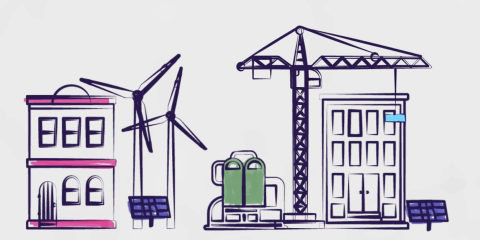
Fern focuses on three essential sectors: real estate, renewable energy and fibre. These are long-duration, asset-backed markets underpinned by strong structural drivers and form part of the bedrock of a modern UK economy. They are also sectors that consistently feature in the UK’s Industrial Strategy, reflecting their importance as national priorities to drive sustainable long-term growth.
This content series will combine a macroeconomic snapshot with on-the-ground insight from the key people responsible for managing Fern’s portfolio. Our aim is to continue providing clear, transparent updates on investment performance, the external environment, the risks we’re navigating and the actions we’re taking to improve performance.
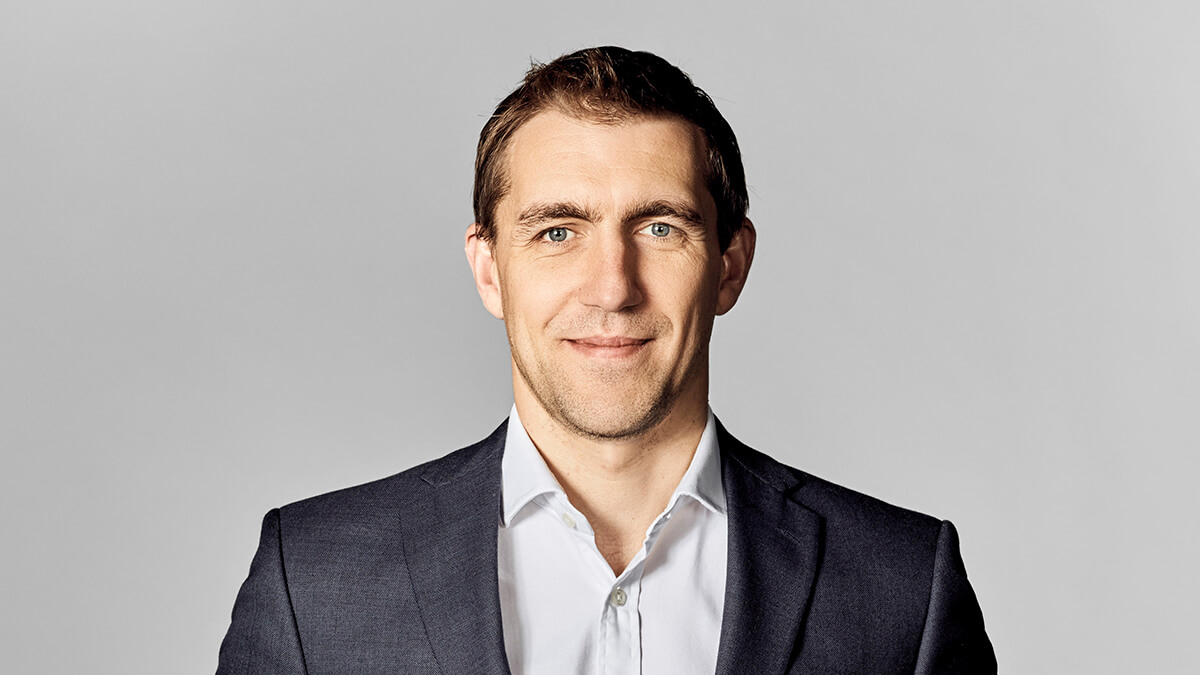
Introducing Ed Clough, Head of Real Assets
For our first edition, we’re introducing Ed Clough, Head of Real Assets at Octopus Investments. Over the past three years, Ed has led Octopus’ £3.4 billion real estate fund management business and recently expanded his role to oversee the teams managing Fern’s real-asset portfolio.
With experience managing capital-intensive assets through market cycles, Ed now works across the portfolio to ensure alignment between sectors, maintain valuation discipline and drive operational performance.
That broader remit provides a valuable portfolio-wide perspective across Fern’s sectors. In this edition, we use that lens to reflect on recent OITS performance and the role the wider macro environment has played.
Q: Since stepping into your expanded role overseeing the OITS portfolio, what have your early observations been about Fern and its underlying assets?
What immediately stands out is the scale, diversification and institutional-quality strength that sits behind Fern. It’s a £3.5 billion trading group with a portfolio of hundreds of underlying assets that spans three essential sectors – housing, renewable energy and fibre – all of which are underpinned by long-term structural demand. Stepping into this role at a time marked by both macro headwinds and sector-specific challenges has reinforced how valuable that breadth of diversification is in a tougher market environment.
A further strength is the operational expertise and depth in the portfolio and the team managing it. Good asset management here goes well beyond capital allocation. The teams are deliberately multidisciplinary, bringing together investment professionals with sector experts, chartered surveyors, construction teams, accountants, healthcare professionals and other specialist roles. That mix of expertise allows us to stay close to the assets, manage them proactively and respond quickly as conditions evolve.
Importantly, being part of the wider Octopus Group gives us access to additional resource and experience across investment, operational and commercial disciplines. In more challenging markets, that level of support is a real advantage. Where appropriate, we’re also prepared to bring in additional senior talent to strengthen capabilities further.
Supporting all of this is a comprehensive reporting and governance framework around the assets, including valuations, to give investors confidence.
Q: As we know, it hasn’t all been positive and OITS hasn’t performed as expected recently. What are your thoughts on that?
We’re aware that it’s been a challenging period in terms of share price performance. Market cycles are part and parcel of investing in long-term infrastructure, but that doesn’t make periods like this any easier. I want to acknowledge that openly and thank investors and advisers for their continued support.
From an operational perspective, the underlying assets are, for the most part, continuing to perform and progress well. The fundamentals across housing, renewable energy and fibre remain intact. However, infrastructure is a capital-intensive asset class, and valuations are sensitive to changes in interest rates and market sentiment – both of which have shifted materially over the past two years.
Where there have been areas of underperformance – particularly in parts of the fibre portfolio, partly driven by intensified competition in the alternative network space – we’ve taken active steps to address this. That includes sharpening commercial execution, focusing on customer growth and ensuring the businesses are well positioned to benefit from the continued consolidation we expect to see across the market.
While we remain measured in our outlook, there are early signs that the macro environment is stabilising. Over time, we would expect that to translate into stronger cashflow generation and, ultimately, improved valuations.
Q: With that portfolio-wide perspective, how are you seeing the current macro environment play out across Fern’s different asset classes?
Having oversight across the portfolio gives us a clearer, joined-up view of how macro conditions are affecting different real-asset markets. Real estate, renewable energy and fibre are capital-intensive sectors with long investment horizons, so they tend to respond in related ways to shifts in interest rates, inflation and capital markets.
With that in mind, the past two years have been shaped by higher-for-longer interest rates, the result of more persistent inflation, and geopolitical uncertainty. Those forces have affected financing costs, valuations and investor and customer sentiment across all three sectors. At the same time, each sector has been adjusting within that environment: real estate markets working through the repricing caused by higher rates and the accompanying lower volumes; renewable energy developers recalibrating around electricity pricing expectations; and fibre markets shifting from rapid expansion into a phase of consolidation.
Periods like this are part of investing in long-duration assets and demand discipline and adaptability. Encouragingly, we’re starting to see greater stability emerge. Looking across the portfolio helps us spot where conditions are improving and where opportunities are beginning to reopen.
Q: How does that influence the way you make investment decisions today?
It reinforces the importance of taking a medium-to-long-term view across the whole portfolio. We assess decisions through a three-to-five-year lens, recognising that short-term volatility is part of investing in capital-intensive real assets. The focus is on making choices today that strengthen performance over that timeframe, rather than over-reacting to near-term market noise.
That means staying disciplined about where we invest and why, and anchoring decisions in structural trends we expect to persist well beyond economic cycles. In real estate, that includes ageing demographics and the UK’s housing shortage. In renewable energy, it’s the continued drive towards decarbonisation and energy security. And in fibre, it’s the long-term demand for faster, more reliable digital connectivity. By focusing on those enduring themes, we aim to build a diversified portfolio that is resilient and designed to perform through cycles.
Q: Can you give an example of how that strategy translates into real projects?
You can see that strategy in action across all three sectors of the portfolio. In real estate, we’ve continued to build scale in retirement living through Rangeford Villages, a specialist developer and operator of high-quality communities for people aged over 60. This is a structurally growing part of the UK housing market, driven by an ageing population and a shortage of suitable later-living accommodation. Since coming under Fern’s ownership in 2017, Rangeford has expanded from two operational villages to five completed communities, with three more in development across the South-East. Its model focuses on independent living with optional, progressive care and high-quality amenities, creating stable occupancy and recurring long-term income once villages are operational.
In renewable energy, Fern continues to invest in proven technologies with stable, long-term contracted revenues. A good example is our wind repowering programme in France. Many early-generation European wind farms are reaching the end of their original operating life, and repowering – replacing older turbines with modern, more efficient models – is becoming essential to maintain clean energy supply. Fern began repowering two French sites it has owned since 2019. One site has already been dismantled in preparation for new turbines, which are expected to generate at least twice as much energy under new long-term contracts. It’s a practical example of how we upgrade existing infrastructure to extend asset life and improve performance.
In fibre, the focus has shifted from heavy construction to commercialisation and scale. Fern’s fibre businesses have largely completed their capital-intensive build phase and moved into a stage centred on growing customer numbers and securing recurring revenues. A key milestone was the launch of Fern’s business-to-business (B2B) wholesale platform in May 2025, which began onboarding high-value resellers shortly after launch. This coincides with the accelerating copper-to-fibre migration – one of the most significant structural shifts in the UK telecoms sector in decades -positioning the portfolio to capture long-term demand for faster, more reliable connectivity.
Across all three sectors, the common thread is investing in assets tied to enduring social and economic needs. We’re focused on developing and supporting projects that deliver practical, long-term value while positioning the portfolio to benefit from structural trends that will play out over many years.
Q: You earlier touched on valuations. With private market valuations increasingly coming under scrutiny, can you explain Fern’s approach in more detail?
It’s an important question. Private assets are becoming more accessible to a broader range of investors, and as access expands, so does scrutiny. Regulators are rightly focused on ensuring valuations in less liquid markets are fair, transparent and properly governed.
At Octopus, we’ve deliberately structured the valuation process so that assets are put under scrutiny at multiple levels. Every asset undergoes a full valuation each quarter in the same way as those in our institutional products. Those valuations are reviewed and challenged internally by the Octopus Valuation Committee — which includes independent valuation experts among its members including the Chair — and supported by third-party verification as appropriate. The Fern share price is reviewed monthly to reflect any material changes between valuations.
Reflecting valuation changes, including recognising impairments where we need to, is key to ensuring that investors can have confidence in Fern and the markets we operate in more widely. As one of the largest managers in this space in the UK, it’s important that we set the right standard.
Q: What gives you confidence looking ahead?
The sectors we invest in are all cyclical to some degree by their nature, but the long-term drivers behind them remain firmly in place. In real estate, the UK still faces a structural shortage of quality housing, and demographic shifts continue to shape demand for retirement and specialist living. In renewable energy, the transition to a lower-carbon system and the push for energy security continue to support investment in clean generation. And in fibre, the move toward faster, more reliable digital connectivity remains a powerful long-term trend.
We’re starting to see early signs of stabilisation in market activity and developers are starting to plan projects again with a medium-term horizon. For us, it’s about staying patient, disciplined and focused on execution.
Fern has a portfolio which continues to progress towards further cashflow maturity, having done a lot of the hard work building solid platforms and businesses which can now operate and grow for years, and even decades, to come.
Looking ahead, we’re staying focused on the long-term structural trends shaping real assets and continuing to manage portfolios through the next phase of the cycle.
Key risks to bear in mind
- This is a high-risk investment. The value of an investment, and any income from it, can fall as well as rise. Investors may not get back the full amount they invest.
- Tax treatment depends on individual circumstances and tax rules could change in the future.
- Tax relief depends on portfolio companies maintaining their qualifying status.
- The shares of unquoted companies could fall or rise in value more than shares listed on the main market of the London Stock Exchange. They may also be harder to sell.
- For OITSPlus investors, the benefits offered by Octopus’ Insurance Policy only apply to eligible deaths. Ineligible deaths, or a misrepresentation in the health declaration could result in the Insurer refusing to settle a claim under the Insurance Policy.