






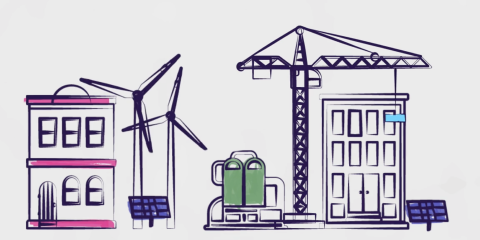


As a brief reminder, investors in the Octopus Inheritance Tax Service (OITS), currently hold shares in a company called Fern Trading Limited (Fern). Fern owns businesses operating in renewable energy, real estate and fibre.
When Fern first invested in fibre in 2019, the UK market looked very different. Full-fibre coverage was still low, demand for better digital connectivity was growing and the move away from the old copper network created an opportunity to build the infrastructure that homes and businesses would increasingly rely on.
Fern was far from alone in recognising that opportunity. Investment flowed into the sector and operators across the UK began building regional fibre networks. Construction accelerated, competition intensified and, in some areas several networks were built to reach the same customers.
Customer demand did not develop at the same pace. Networks were built faster than customers moved onto them, while many households were reluctant to pay substantially more for fibre when their existing copper connection continued to meet their needs. Inflation, higher interest rates and competition for labour and materials also pushed up construction costs.
The long-term need for fibre has not disappeared. But with extensive infrastructure now in the ground, the opportunity is no longer simply about building more network. Increasingly, it is about making better use of the networks that already exist.
That shift is central to understanding how Fern’s strategy has evolved, the businesses in the portfolio of Fern B shares and why one of Fern’s fibre businesses, Vorboss, is in the portfolio of Fern A shares.
Specialist fibre operating leadership
Recognising this changing environment, Fern has strengthened the specialist operating expertise supporting its fibre businesses over the past 18 months. Sitting within Fern, these roles are distinct from the investment team, with a focus on business operations, commercial growth, technology and connectivity.
At All Points Fibre Network (APFN) the focus is on developing APFN’s wholesale partnerships and connections. Mark Walker joined as CEO in June 2026, having previously been Chief Commercial Officer of PXC. James Hickman joined as Chief Technology and Information Officer in May 2026, following senior roles at Virtual1 and TalkTalk/PXC. They join Nisreen El-Kaloush, Chief Commercial Officer who joined in 2023 and also previously held senior roles at Virtual1 and TalkTalk.
The operating team is supported by Adam Dunlop, Octopus Operating Partner and Executive Chairman of Fern’s fibre companies, who brings telecoms experience from Cable & Wireless and TalkTalk. His remit spans Fern’s fibre businesses across both Fern A and Fern B.
From building networks to making better use of them
Fern’s original strategy was to build and own regional fibre networks and sell connectivity over them. Owning both the infrastructure and the customer relationship meant retaining more of the value generated by each connection. It required substantial upfront investment, but the expectation was that fixed network costs would be spread across a growing revenue base as more customers connected.
As the market became more competitive, continuing to build local networks where fibre infrastructure was already available became harder to justify. The strategy therefore shifted away from further construction and towards commercialising the infrastructure and capabilities already in place.
That strategy now sits within Fern B shares.
Fern B shares – the retail fibre businesses
Fern B shares comprise Fern Fibre Trading Limited, or FFTL, which holds Fern’s retail and wholesale fibre interests. Its main operating business is AllPoints Fibre Networks, or APFN.
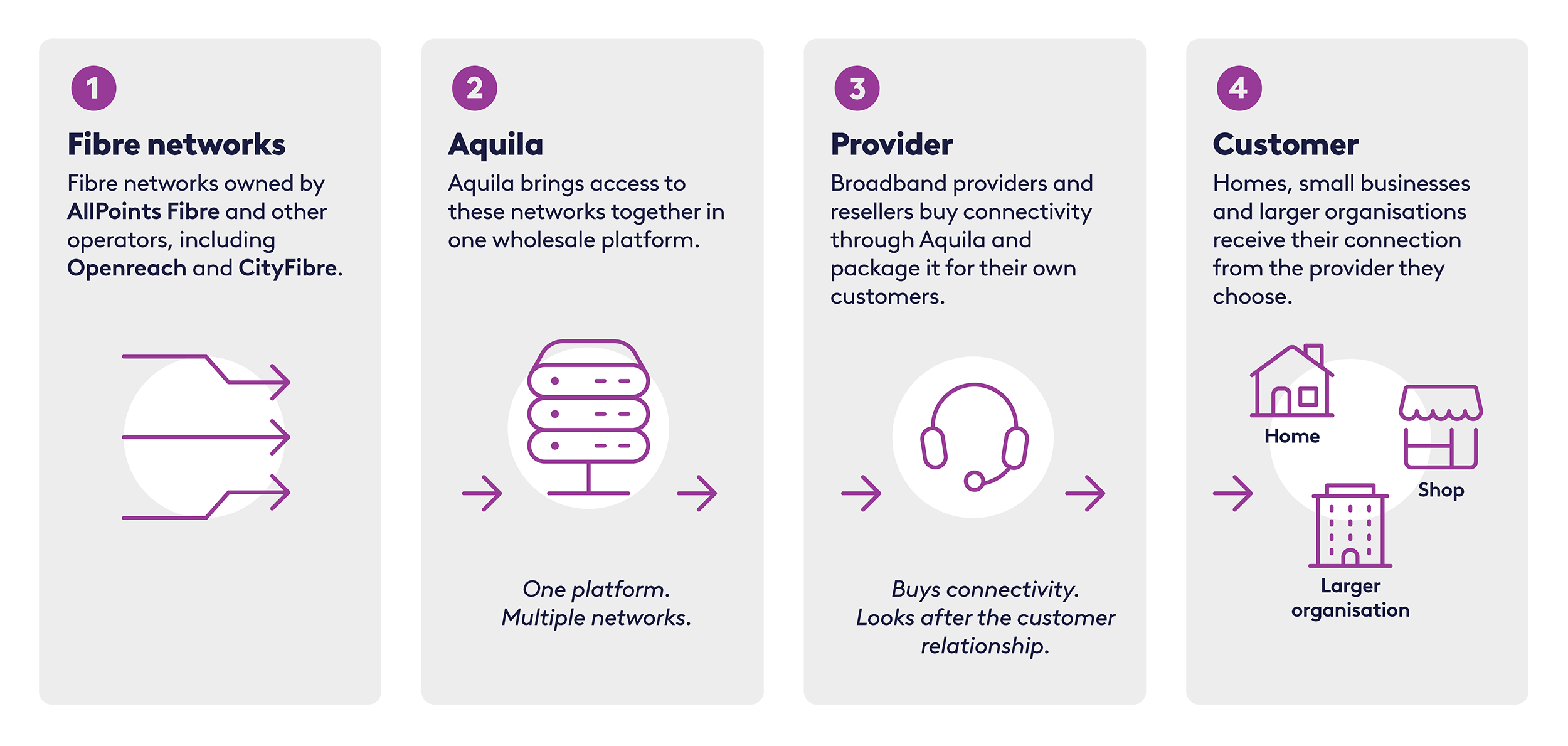
APFN combines the local fibre networks built through Fern’s earlier investment strategy with Aquila, its wholesale connectivity platform. The owned networks remain part of the proposition, but APFN no longer needs to build and own a network everywhere it wants its partners to reach.
APFN is a business-to-business wholesale provider. Its customers include internet service providers, virtual internet service providers, managed service providers, resellers and other connectivity businesses. These partners buy connectivity through APFN and package it into services for the homes and businesses they serve.
Aquila is designed to make the process simpler. It is an API-led platform that brings together access to APFN’s own infrastructure and several other physical fibre networks through one integration and one commercial relationship. An API is essentially a way for different technology systems to communicate with each other automatically, so information and requests can pass between them without everything having to be handled separately.
Aquila helps bring ordering, service management, billing and visibility across those networks into one place. Aquila is the primary focus for Fern B.
Without aggregation, a connectivity provider may need separate technical systems, operational processes and commercial arrangements for each network it wants to use. Aquila reduces that burden and allows providers to reach customers across a much wider area than APFN’s own local networks cover.
Through Aquila, partners can currently reach more than 23 million ready-for-service properties across the UK1.
This is an important evolution of the original investment strategy. APFN’s existing fibre assets have not been left behind. They now form part of a wider wholesale proposition that combines owned infrastructure with access to other networks.
Why Fern continues to see a case for fibre
The current approach to fibre is an evolution of the original regional build strategy. Fern’s fibre businesses own infrastructure and have capabilities that can now be used differently to reflect the market that exists today.
As the market has changed over the last five years, this, by its nature, remains an earlier-stage commercial proposition. The wholesale strategy launched in May 2025, and commercialisation has taken longer than originally expected. Selecting a wholesale provider is a significant operational decision for companies, particularly when it involves moving an existing customer base from one provider to another, one that takes time.
APFN continues to have a clear opportunity to help connectivity providers reach more customers through existing infrastructure, with less complexity and a more capital-efficient model than further regional network construction. Its focus now is on converting that opportunity into more active connections and recurring wholesale revenue.
Vorboss: a specialist enterprise opportunity within Fern A shares
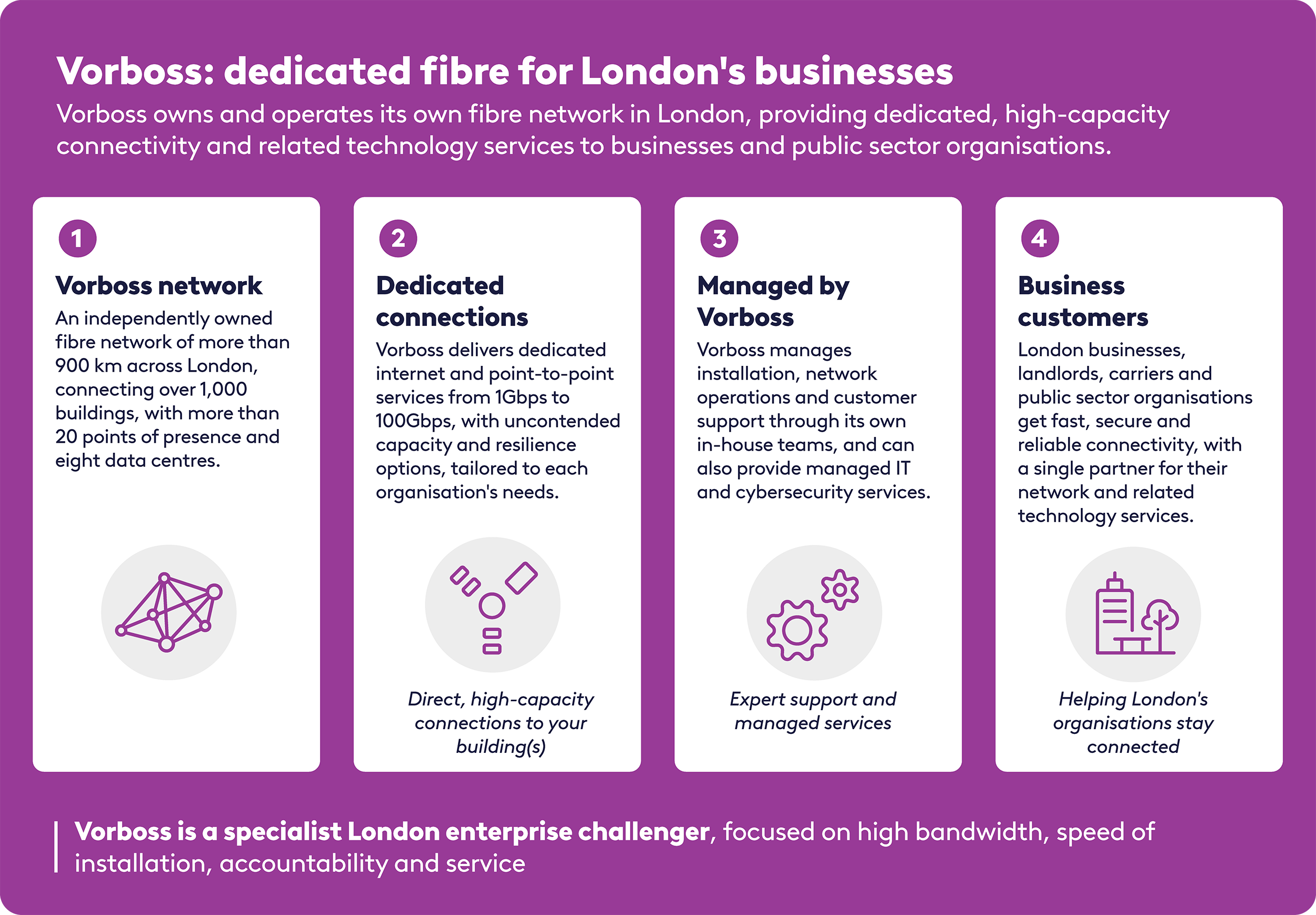
The fibre business within the portfolio of Fern A shares, Vorboss, focuses on dedicated, high-capacity connectivity for London businesses. It serves a distinct market from APFN’s broader wholesale proposition, with its own operating model and growth opportunity.
Vorboss operates in a specialist space where customers need dedicated, high-capacity and resilient connectivity. It offers exclusive connectivity and direct point-to-point services from 1Gbps to 100Gbps, with uncontended capacity and resilience options. It also manages installation, network operations and customer support through its own teams and has expanded into managed IT and cybersecurity services.
Owning and operating its specialist London network therefore remains central to Vorboss’s proposition. The most capital-intensive phase of that network build is complete, and its focus is now on connecting more businesses, increasing network use and growing recurring contracted revenue and managed technology services.
Fern believes these two distinct approaches offer opportunities in fibre. However, as with all investments, capital is at risk and investors may get back less than they invested. OITS portfolios make investments into privately held businesses, which may be harder to value and less liquid than publicly listed companies. Investors should view them as a high-risk, long-term commitment.
APFN and Vorboss: distinct opportunities, a shared focus on long-term value
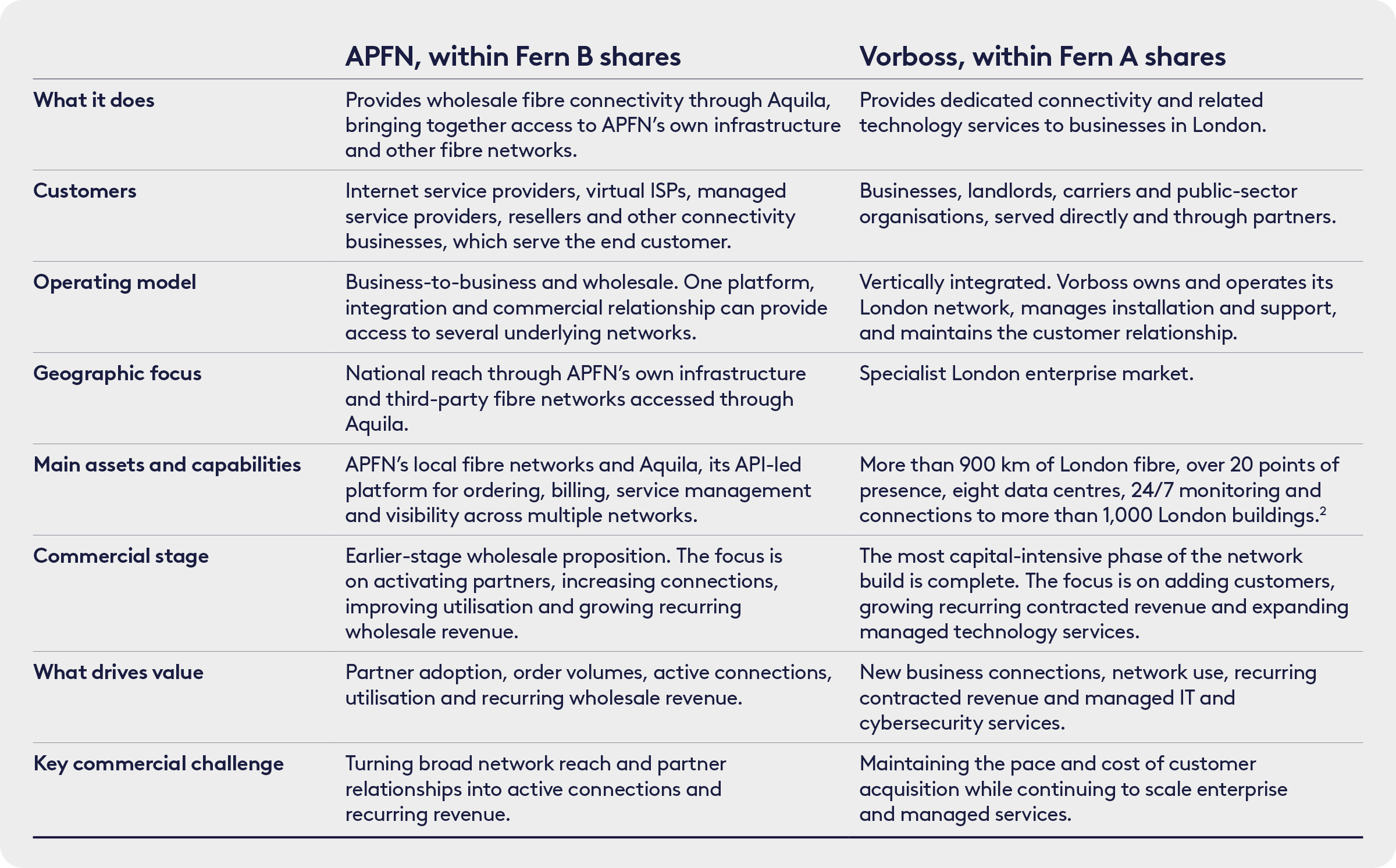
Vorboss and APFN serve different customers, have different business models and are at different stages of development. The distinction is not about one business model being better than another, but about giving each business an investment timeframe suited to its needs.
For Vorboss, the focus remains on connecting more London businesses to its specialist enterprise network and growing recurring contracted revenue. APFN has a meaningful opportunity to use Aquila to extend its wholesale reach, turning access to existing infrastructure into active partnerships, more connections and recurring wholesale revenue.
The Fern A and Fern B shares structure is designed to support these distinct opportunities. It gives APFN, FFTL’s main operating business, time and flexibility to develop its wholesale proposition within the Fern B share portfolio, while allowing Vorboss and the portfolio of Fern A share’s other businesses to pursue their own growth plans.
As with all investments, there is a risk and the fibre sector has been particularly challenged recently. However, the shared aim is to build on the infrastructure and capabilities already in place, grow sustainable recurring revenue and seek to create long-term value for investors.
BR-qualifying investments are not suitable for everyone. This communication does not constitute advice on investments, legal matters, taxation or any other matters. We recommend investors seek professional advice before deciding to invest. The tax treatment depends on individual circumstances and the relevant rules could change. Investors should read the product brochure before deciding to invest, this can be found at octopusinvestments.com. Personal opinions may change and should not be seen as advice or recommendation. Issued by Octopus Investments Limited, which is authorised and regulated by the Financial Conduct Authority. Registered office: 33 Holborn, London EC1N 2HT. Registered in England and Wales No. 03942880. We record telephone calls. October 2026. CAM016152